Last Updated on Thursday, April 02, 2026
This page features real-time flow data and other helpful information about 10 of California's best whitewater rafting rivers.
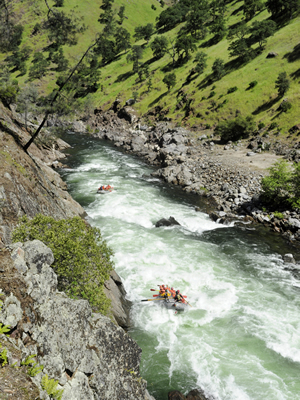
Winter 2025–26 got off to a solid start, with early storms in November and December building a good base of snowpack in the Sierra. A welcome round of February storms helped reinforce those gains, but an unusually early March heat wave accelerated snowmelt and shortened what would typically be a longer spring runoff. Even so, despite the early snowmelt, several winters of solid precipitation have left reservoirs across California in great shape, keeping conditions lined up for a great 2026 rafting season.
The spring window on free-flowing rivers will be shorter this year, so plan to catch those runs early as flows come on and taper off sooner than usual. That said, dam-controlled rivers will offer excellent rafting conditions all season long, with scheduled releases providing fun, reliable whitewater through the end of October. However you like to experience the river, 2026 will have it all!
For more specific information about each river’s season predictions, see the individual river sections below or contact us - depending on what you are looking for (Beginner-Intermediate or more Advanced) we will be happy to help you find the best trip and time of year to raft for your group.
To stay connected and up-to-date on all California river flow information, sign up for the AO eNews, read the AO Blog, or follow us on Facebook or Instagram.
The measurement used to determine the flow in a river is “CFS”, which is Cubic Feet per Second. Gauges along the river indicate how much water is moving past a given point. The higher the “CFS” the higher the flow. Most of the time, higher flows (higher CFS) means more exciting and challenging rafting trips.
Intermediate-Advanced
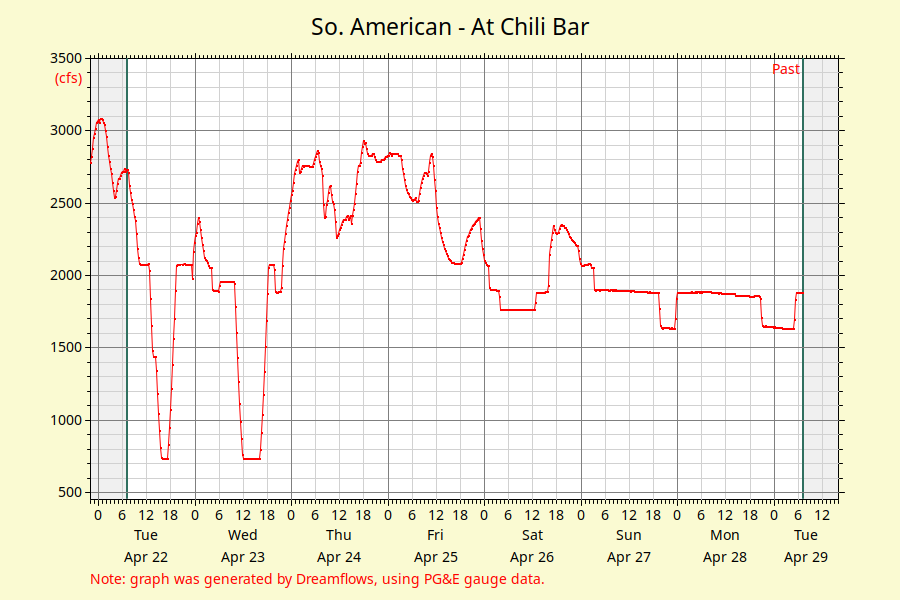
The South Fork of the American River is a classic "dam-controlled" river with six reservoirs upstream of the whitewater section. Due to the large amount of stored water, these upstream reservoirs are able to release water year-round on select days of the week.
All-Outdoors 2026 Trip Season: April - October
Normal flows are scheduled six days a week from April through Labor Day (September 7), with no guaranteed water on Wednesdays. After Labor Day, the release schedule shifts to four days a week: Thursday–Sunday in September and Friday–Monday in October.
Tom Sawyer Float trips on the easy section of the South Fork are expected to start in June and will be available on these same days.
* No matter what kind of winter California has - lots of precipitation or little, the South Fork of the American's constant flows, many fun and exciting rapids, easy access, and relatively low cost make it one of our best whitewater rivers.

1200 - 3000 CFS = Normal flows, usually associated with summer and fall. Plenty of fun Class II & III whitewater and beautiful scenery. Great flow for first timers, groups and families, yet still enjoyable for experienced boaters. Wetsuits only required during cooler months. Usual minimum age: 8 years and minimum weight 50 lbs.
3000 - 5000 CFS = Moderately-High flows. Challenging Class III+ whitewater, exciting for first timers and veterans alike. Less technical (fewer rock obstacles), bigger waves, swifter moving water than at Normal flows. Wetsuits usually required. Usual minimum age increased to 10 years.
5000 -8000 CFS = High flows. Challenging Class III-IV whitewater. Faster moving water with longer rapids. Participants should be competent swimmers, active, not overweight. Wetsuits required. Usual minimum age increased to 12 and 90 lbs.
Above 8000 CFS = Very High flows. The river changes into an Intermediate Class IV river at these unusually high flows. Speed of water, size of waves, length of rapids increase. Participants should be competent swimmers, active, not overweight. Wetsuits required. Usual minimum age increased to 15 years.
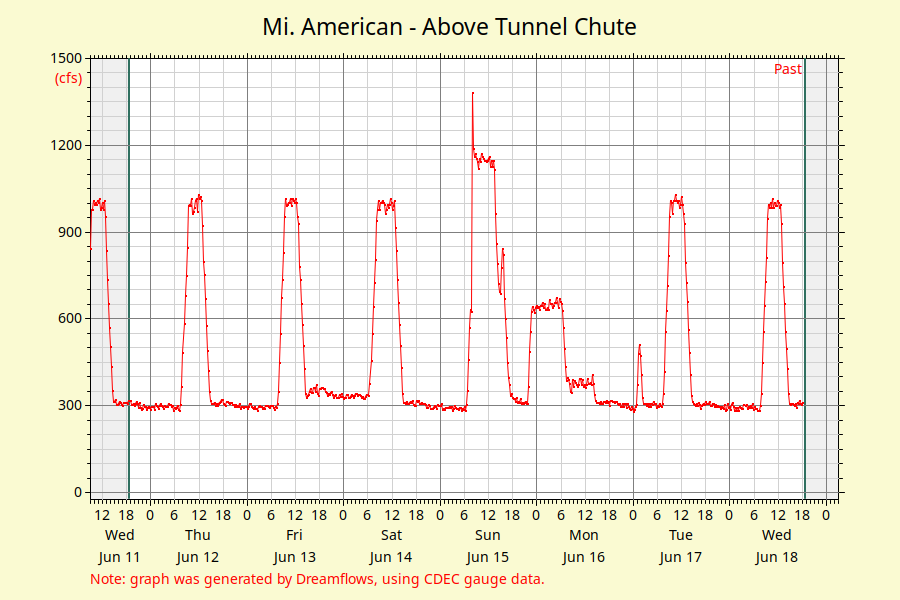
Rafting flows on this beautiful river typically start in May and last through September thanks to consistent water releases from two upstream reservoirs.
All-Outdoors 2026 Trip Season: Late May through September
Normal flows are expected to begin on Memorial Day weekend (May 23) with consistent water releases scheduled six days a week (water is not guaranteed on Mondays). After Labor Day (September 7), these flows will continue five days a week (no Mondays and Thursdays) through the end of September.
The Middle Fork is one of the best options for 1-, 2-, and 3-Day wilderness trips. Predictable water releases from the Oxbow PG&E Power House just above the run create a wonderful opportunity for Class III - IV rafting inside a 2000' deep wilderness canyon.
850 - 1300 CFS = Normal flows. Perfect for adventurous first timers or experienced paddlers. An excellent opportunity to experience Class IV whitewater while enjoying the stunning beauty of the Middle Fork canyon. Usual minimum age: 12 years old and 90 lbs.
1300 - 2000 CFS = Moderately-High flows. More challenging Class IV whitewater, yet suitable for a wide range of skill levels. Wetsuits may be required during cooler months. Usual minimum age may be increased.
2000 - 4000 CFS = High flows. Portages required around several major rapids. Trips are not usually offered during periods of high flows due to the number of portages.
Above 4000 CFS = Very High flows. Not advisable. Most rapids are either washed out or need to be portaged.
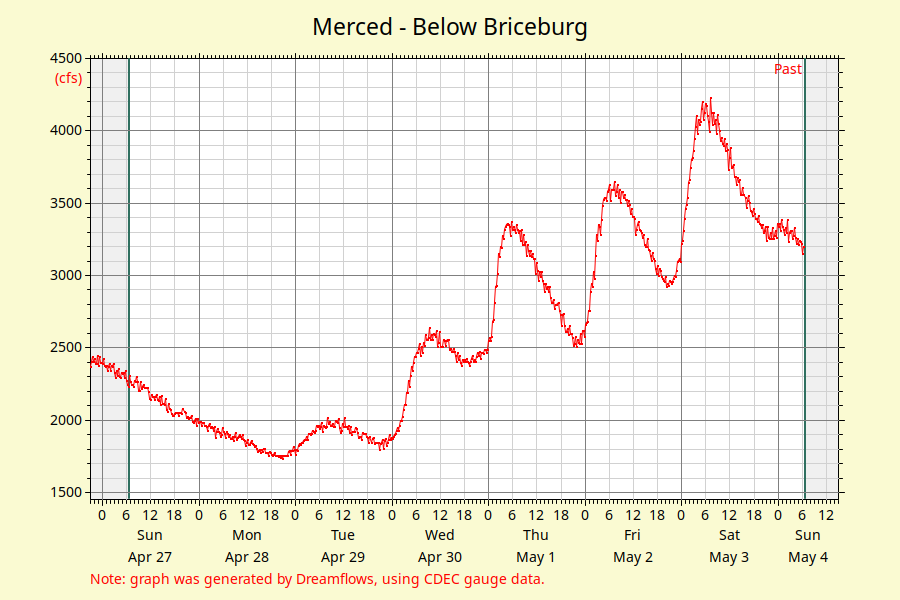
The Merced River is free-flowing and has no dams above the whitewater section. When winter snows begin to melt the Merced begins to run. Normally the river becomes runnable in April and continues through mid-July.
All-Outdoors 2026 Trip Season: April - May
In 2026, we plan to start rafting on the Merced River in April and offer trips through the second half of May. While the river may remain runnable at lower flows beyond late May, we'll wrap up our Merced trips as flows drop and shift our focus to the other wonderful rivers we offer.
600 - 1500 CFS = Lower flows. Great for eager first timers and experienced rafters. Class III+ whitewater. Wetsuits only required during cooler months. Usual minimum age may be increased from 12 to 13 years.
1500 - 4000 CFS = Normal flows. Great for eager first timers and experienced rafters alike. Plenty of Class III & IV whitewater. Wetsuits required at higher flows and/or in cooler months.
4000 - 6000 CFS = Moderately-High flows. Challenging Class IV whitewater, exciting for adventurous first-timers and experienced rafters. Bigger waves and swifter moving water. Participants should be competent swimmers, active, not overweight. Wetsuits required. Usual minimum age increased from 12 to 15 years.
6000 - 8000 CFS = High flows. Speed of the water picks up. Rapids lengthen and calms are shorter. Out of boat experiences (unplanned swims) become more challenging. Participants should be competent swimmers, active, not overweight. Wetsuits required. Usual minimum age is 15 years.
Above 8000 CFS = Very High flows. Speed of water, size of waves, and length of rapids increase. Calm stretches move swiftly. Previous rafting experience is recommended. Participants should be competent swimmers, active, not overweight. Wetsuits required. Usual minimum age is 15 years.
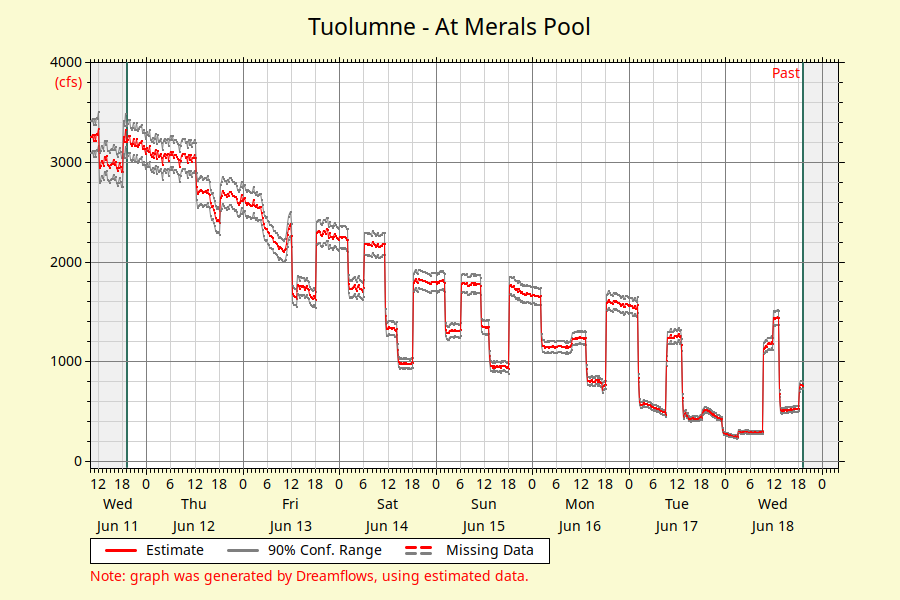
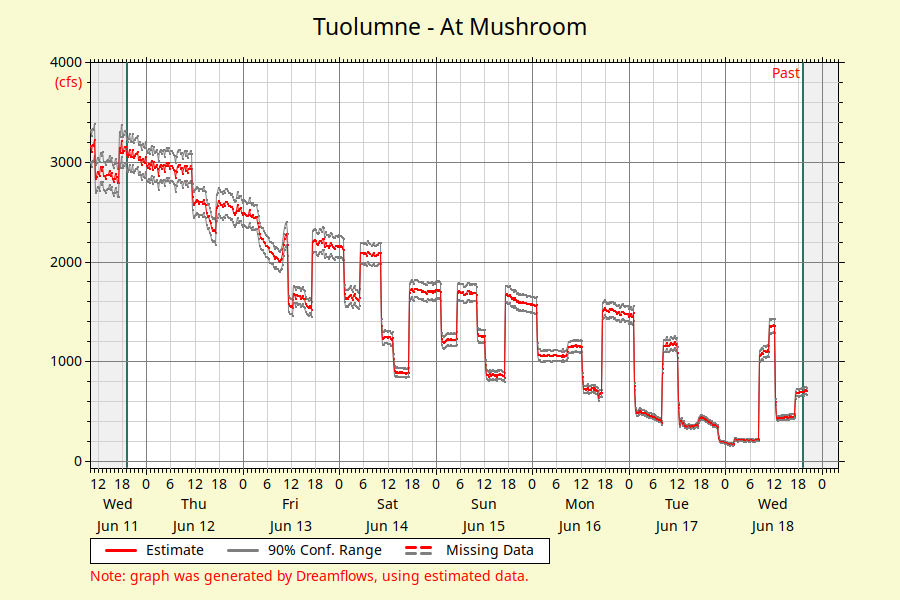
The Tuolumne is a dam-controlled river with reliable flows from April through early September. Raftable flows are released 7 days a week except for every other Wednesday during the summer months.
All-Outdoors 2026 Trip Season: April - September 7
The Tuolumne rafting season gets underway in April, with normal flows delivering the kind of consistent, exciting whitewater this Wild & Scenic river is known for. Beginning in late May, every other Wednesday will not have guaranteed flows and after Labor Day (September 7), the river will shut down for annual hydro project maintenance and water conservation.
600 - 900 CFS = Lower flows. Technical rafting through smooth boulders above the water and smaller ones under the surface. Quick maneuvering and agile paddling required, as well as good balance and the ability to respond quickly to commands given by the guide. Rapids are abrupt and steep.
900 - 3000 CFS = Normal flows. Great for adventurous first timers and experienced rafters. Plenty of Class III & IV whitewater. Wetsuits required during cooler months. Usual minimum age: 13 years old.
3000 - 5000 CFS = Moderately-High flows. Great for experienced rafters and adventurous first timers. Significant amount of Class III & IV+ whitewater. Wetsuits required during cooler months and higher flows. Usual minimum age may be increased to 15 years old.
5000 - 8000 CFS = High flows. Challenging Class IV+ whitewater, exciting for experienced rafters and adventurous first-timers. Bigger waves and swifter moving water. Participants should be competent swimmers, active, not overweight. Wetsuits required. Usual minimum age increased to 15 years old.
Above 8000 CFS = Very High flows. Speed of water, size of waves, and length of rapids increase. Out of boat experiences (unplanned swims) become more challenging. Calm stretches move swiftly. Previous experience is recommended. Participants should be competent swimmers, active, not overweight. Wetsuits required.
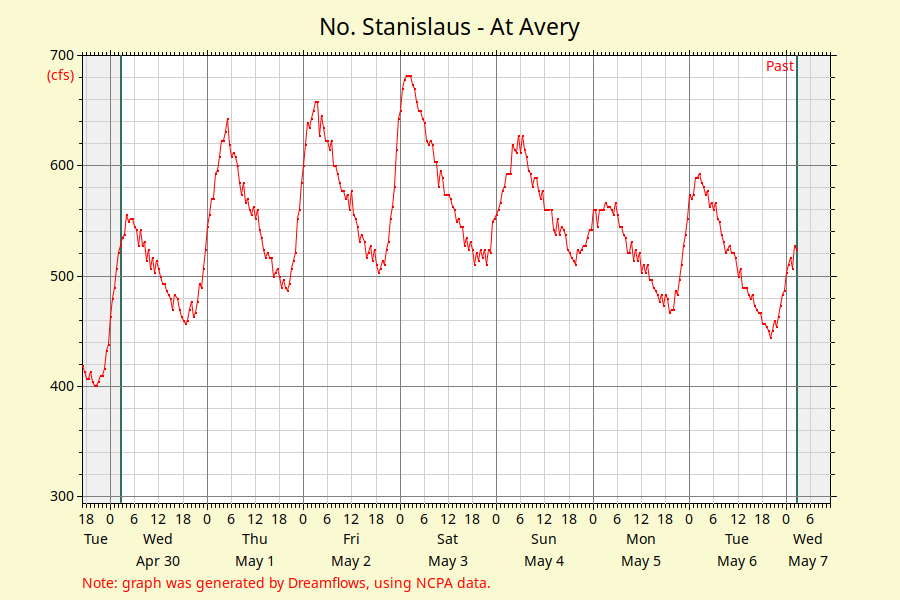
The North Fork of the Stanislaus River acts like a free-flowing river, even though Spicer Reservoir is located 14 miles upstream at an elevation of 6300 feet. We rely on low elevation melting snow below the reservoir that feeds this beautiful river during spring. Usually the season is short, lasting from late April to late May.
All-Outdoors 2026 Trip Season: To Be Determined
This year, an early March heat wave caused spring snowmelt to come much sooner than typical. A short April season is still possible, depending on weather patterns and any incoming storms in the coming weeks.

450 - 500 CFS = Lower flows. Very technical rafting through boulders and narrow chutes. Many rapids start with blind turns and require quick and powerful maneuvers. Rapids and drops are abrupt in regard to changes in elevation and speed. Participants should be competent swimmers, active, not overweight. Boats remain light with 4 to 5 people per raft at the most.
500 - 700 CFS = Normal flows. Technical Class IV rafting through tight chutes, and over radical drops. At these flows the river resembles a trout stream at a high elevation complete with boulders, fallen trees and small pools. Participants should be competent swimmers, active, not overweight. Wetsuits are required. Usual minimum age: 15 years old.
700 - 1200 CFS = Moderately-High flows. Less rock obstacles and more drops, waves become bigger. Participants should be competent swimmers, active, not overweight. Plenty of Class IV+ whitewater. Wetsuits required.
1200 - 2000 CFS = High flows. Speed of water, size of waves, and drops increase. Calms between rapids become shorter. The obstacles change from rocks and boulders to drops and hydraulics. Oar-paddle raft option may be utilized. Participants should be competent swimmers, active, not overweight. Wetsuits required.
Above 2000 CFS = Very High flows. Rapids begin to "link" with one another and become very challenging. Calms between the rapids become shorter. Participants should be competent swimmers, active, not overweight. Wetsuits required.
The Kaweah is a free-flowing river with no dams above the whitewater section. Typically the season runs from mid-April to June or early July.
All-Outdoors 2026 Trip Season: April - May
Kaweah trips are expected to start in April and run through the second half of May. This year, April will be the best time to catch this fast-moving and exciting river before flows taper off.

700 - 1200 CFS = Lower flows. Technical rafting through boulder filled rapids and narrow exciting passages. Drops are abrupt, sharp and involve significant changes in elevation. Participants should be competent swimmers, active, not overweight. Good balance and the ability to respond to commands quickly and paddle hard are necessary. Usual minimum age: 15 years old.
1200 - 1800 CFS = Normal flows. Challenging Class IV+ whitewater. Previous rafting experience is recommended and helpful. This river is action-packed, filled with fun waves, lots of maneuvering, and short breaks in between. Participants should be competent swimmers, active, not overweight. Wetsuits often required.
1800 - 3000 CFS = Moderately-High flows. Faster moving water with bigger waves and longer rapids. Participants should be competent swimmers, active, not overweight. Wetsuits required.
3000 - 4000 CFS = High flows. Speed of water, size of waves and drops increase. Calm sections between rapids become shorter in length. Out of boat experiences (unplanned swims) become more challenging. Participants should be competent swimmers, active, not overweight. Oar-Paddle Combo rafts used most often. Wetsuits required.
Above 4000 CFS = Very High flows. The river rarely gets to these levels. When it does, it has similar features to High flows, but everything about the rapids is bigger and faster. The water in the calm sections also moves at a swifter pace. Participants should be competent swimmers, active, not overweight. Wetsuits required.
The North Fork is a free-flowing river and runs only in the spring when the winter snowpack begins to melt. Its drainage is relatively small and low, so the season is shorter than other rivers and only lasts until the middle or end of May in most years.
All-Outdoors 2026 Trip Season: April
Due to a drier-than-normal winter, the North Fork is expected to have lower to normal flows for a few weeks in April, possibly lasting into early May.
600 - 1200 CFS = Lower flows. Forgiving Class IV whitewater. Best for experienced rafters who like the challenge of difficult paddling and maneuvers. Participants should be competent swimmers, active, not overweight. Wetsuits only required during cooler months. Usual minimum age: 15 years old.
1200 - 1800 CFS = Normal flows. Challenging Class IV+ whitewater, exciting for veterans and adventurous first-timers. Less rock obstacles and more waves. Participants should be competent swimmers, active, not overweight. Wetsuits required.
1800 - 2200 CFS = Moderately-High flows. Challenging Class IV+ whitewater,faster moving water, with bigger waves and longer rapids. Participants should be competent swimmers, active, not overweight. Previous experience recommended and helpful. Wetsuits required.
2200 - 3500 CFS = High flows. Very challenging Class IV+ whitewater with some Class V rapids. Speed of water, size of waves and drops increase. Calm sections between rapids become shorter in length. Out of boat experiences (unplanned swims) become more challenging. Participants should be competent swimmers, active, not overweight. Wetsuits required.
3500 CFS = Very High flows. The river rarely gets to these levels. When it does, it has similar features to High flows, but everything about the rapids is bigger and faster. The water in the calm sections also moves at a swifter pace. Participants should be competent swimmers, active, not overweight. Wetsuits required.
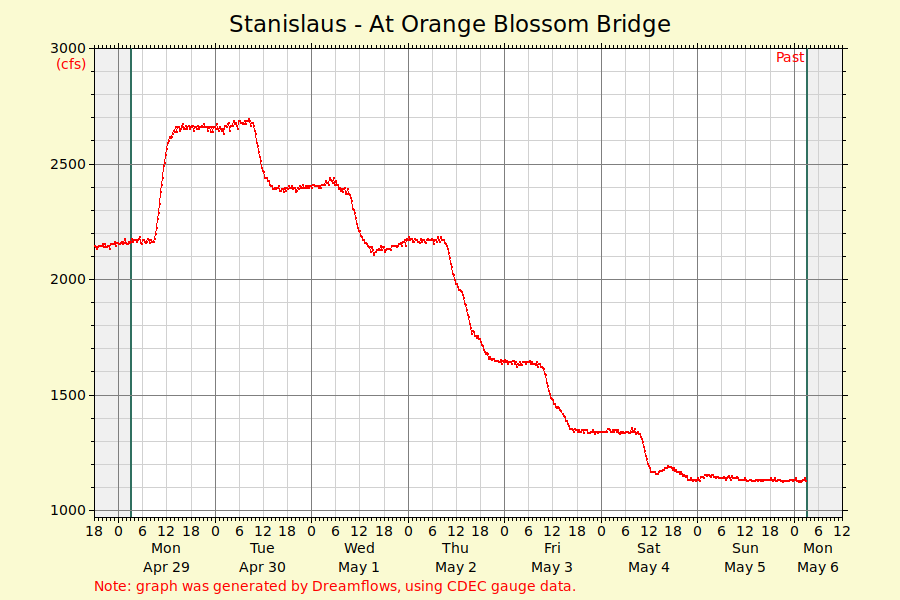
The Goodwin Canyon section of the Stanislaus River is a dam-controlled river. In years with average snowpack there is usually a window of raftable water releases during the spring snowmelt, however we don’t always raft this river in spring time. During the summer time, most of the water from the reservoir directly above this run is diverted into large canals just upstream from the whitewater section. These canals bring water to farmers in the San Joaquin Valley. In October water releases are typically increased for a few weeks to signal salmon to return for spawning. In years of heavy snowpack more water is released for the salmon and flows are typically consistent from April to October, 7 days a week.
All-Outdoors 2026 Trip Season: October 17 - 18, October 24 - 25
In 2026 we are planning our Goodwin Canyon Double Runs trips for two weekends in October: Saturday & Sunday, October 17 - 18 and 24 - 25. You can learn more about these trips on our blog.

500 - 700 CFS = Lower flows. Very technical rafting through boulders and narrow chutes. Many rapids require quick and powerful maneuvers. Rapids and drops are abrupt in regard to changes in elevation and speed. Participants should be competent swimmers, active, not overweight. Boats remain light with 4 to 6 people per raft at the most. Wetsuits required.
700 - 1500 CFS = Normal flows. Technical Class IV+ rafting through tight chutes, and over exciting drops. At these flows the river moves slow in the calms but picks up speed through the drops. Participants should be competent swimmers, active, not overweight. Wetsuits required. Usual minimum age: 15 years old.
1500 - 2000 CFS = Moderately-High flows. Less boulders inside the drops. More powerful hydraulics and fun waves. More boulders and rocks are covered up with water eliminating some obstacles and creating more holes to thrill or avoid. Participants should be competent swimmers, active, not overweight. Several Class IV+ rapids are approaching Class V. Wetsuits required.
2000 - 3000 CFS = High flows. Rapids remain the same length, size of waves and drops increase. Water in calm sections moves swifter. The obstacles change from rocks and boulders to stomping hydraulics and holes. Participants should be competent swimmers, active, not overweight. Wetsuits required.
Above 3000 CFS = Very High flows. The river rarely gets to these levels. When it does, it has similar features to High flows, but everything about the rapids is bigger and faster. The water in the calm sections also moves at a swifter pace. Participants should be competent swimmers, active, not overweight. Wetsuits required.
The Cal Salmon is a free-flowing river and usually only runs in the spring when the winter snowpack is melting. The season typically runs from April through June, although in most years we concentrate bookings into one weekend trip in late April. Later trips are possible for large groups, depending on flows and availability.
All-Outdoors 2026 Trip Season: None Expected
With very limited snowpack in Northern California, rafting trips on this free-flowing river are not expected this season. We plan to be back in spring 2027.
1000 - 1400 CFS = Lower flows. Forgiving Class IV and some Class V whitewater. Best for experienced rafters and adventurous first-timers who like the challenge of difficult paddling and maneuvers. Participants should be competent swimmers, active, not overweight. Wetsuits only required during cooler months.
1400 - 3000 CFS = Normal flows. Challenging Class IV+ and Class V whitewater, exciting for veterans. Previous experience recommended and helpful. Less rock obstacles, more waves and swifter moving water. Participants should be competent swimmers, active, not overweight. Wetsuits required.
3000 - 4000 CFS = Moderately-High flows. Challenging Class V whitewater, faster moving water, with bigger waves and longer rapids. Previous rafting experienced recommended. Participants should be competent swimmers, active, not overweight. Wetsuits required.
4000-5000 CFS = High flows. Very challenging Class V whitewater. Speed of water, size of waves, and drops increase. Calms between rapids become shorter. Out of boat experiences (unplanned swims) become more challenging. Participants should be competent swimmers, active, not overweight.Wetsuits required.
Above 5000 CFS = Very High flows. The river rarely gets to these levels. When it does, it has similar features to High flows, but everything about the rapids is bigger and faster. The water in the calm sections also moves at a swifter pace. Participants should be competent swimmers, active, not overweight. Wetsuits required.
Cherry Creek is the upper stretch of the Tuolumne River and considered by many experienced rafters to be the most difficult commercial rafting trip in the U.S. In most years, the water flows are too high in spring and early summer. Flows between 1300 and 2000 CFS are considered ideal for this ultimate whitewater challenge.
All-Outdoors 2026 Trip Season: June - September 7
All-Outdoors plans to begin Cherry Creek trips in mid-June, running through Labor Day (September 7). Water is released daily except for every other Wednesday. After Labor Day water releases from upstream reservoirs become too low for Class V rafting.

1000 - 1500 CFS = Normal flows. Challenging Class V whitewater, exciting for veterans. Previous rafting experience highly recommended. Big drops over and around large boulders mean quick maneuvering around obstacles. Difficult and long swims are possible should someone fall out of the raft. Participants should be competent swimmers, active, not overweight. Wetsuits required. Usual minimum age: 17 years old.
1500 - 2200 CFS = High flows. Very challenging Class V-V+ whitewater. Waves, drops, and holes become bigger, water moves faster. Calms between rapids are shorter and move swifter. Participants should be competent swimmers, active, not overweight, with previous Class IV+ rafting experience. Wetsuits required.
Get season updates, latest rafting videos & blogs, plus enter to Win a Free Trip for Two! eNews Details